
EV Ready Homes: Why Charging Infrastructure Will Matter More In 2026
21 Sep, 2026
By : Admin
EV Ready Homes: Why Charging Infrastructure Will Matter More In 2026
In 2026, electric vehicle charging infThe way people think about a home is changing with the evolution of everyday technology and changing mobility needs. As electric vehicles become increasingly common on Indian roads, homebuyers are beginning to consider something that was rarely part of a property discussion a few years ago: where and how they will charge their vehicle at homerastructure is becoming an increasingly relevant consideration in residential real estate, particularly for buyers planning to remain in their homes for many years. A well designed home is no longer judged only by its location, layout, amenities and connectivity. Future readiness is also becoming part of the conversation. For developers and real estate professionals, this means understanding how changing consumer needs can influence the way residential communities are planned. For homebuyers, it presents an opportunity to choose properties that can accommodate not only their current lifestyle but also the technologies and mobility choices that are likely to become more important in the years ahead.
The Growing Importance of Electric Vehicle Charging at Home
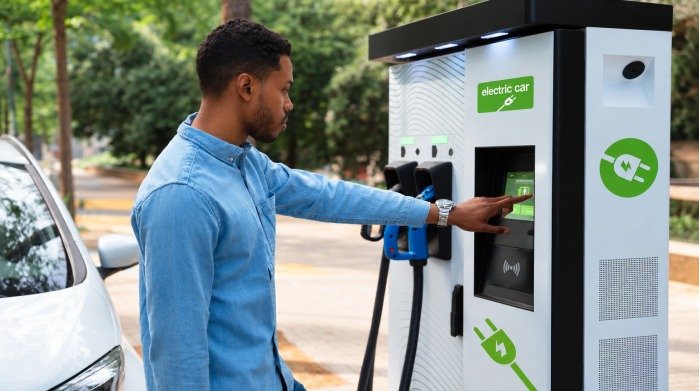
For an electric vehicle owner, access to convenient charging can be almost as important as access to parking. Unlike a conventional vehicle that can be refuelled relatively quickly at a fuel station, an electric vehicle is often most conveniently charged when it is parked for an extended period. For homeowners, this naturally makes residential charging an important consideration. A dedicated charging point within or near the parking area can provide greater convenience by allowing residents to charge their vehicles while they are at home, rather than depending entirely on public charging stations. As electric vehicle ownership grows, the availability of appropriate charging infrastructure within residential communities could increasingly influence the attractiveness of a property. Buyers may therefore begin asking not only whether a project provides parking, but whether that parking can support their present or future electric vehicle requirements.
EV Readiness Is About More Than Installing a Charger
An EV ready residential development involves more than simply placing a charging unit in a parking area. The electrical infrastructure of the building and the availability of suitable power capacity are important considerations when planning charging facilities. Residential projects also need to consider how charging can be managed as the number of electric vehicles within the community increases. A facility that works comfortably for a small number of residents may require a different approach when a significant portion of the community begins using electric vehicles.
This makes future planning particularly valuable. Infrastructure that allows charging facilities to be expanded as demand increases can give a residential project greater flexibility. Homebuyers may not own an electric vehicle today, but the ability to accommodate one in the future can become an important part of the property's long term value. This is especially relevant for younger buyers and families who are making a home purchase with a long ownership horizon in mind.
Parking Is Becoming a Technology Question
Parking has traditionally been viewed as a straightforward residential amenity. With the growth of electric mobility, however, it is becoming increasingly connected with technology and infrastructure. The location of parking spaces, access to electrical connections and the ability to safely install charging equipment can all influence how convenient EV ownership is within a housing community. In larger residential developments, thoughtful planning can help ensure that charging facilities do not become an afterthought as demand grows.
This shift also reflects a broader change in the expectations of homebuyers. Modern residential projects are increasingly expected to support the practical requirements of contemporary lifestyles. Just as residents value reliable internet connectivity, security systems and efficient building services, access to EV charging infrastructure may gradually become another expected feature. The importance of this facility will naturally vary between locations and communities, but its relevance is likely to increase as electric vehicles become a more familiar part of everyday transportation.
A Future Ready Home Can Offer Greater Convenience
One of the strongest arguments for EV ready homes is not necessarily immediate financial benefit but long term convenience. A home purchased today may remain with a family for ten, fifteen or even twenty years. During that period, transportation preferences and vehicle technology can change considerably. A property that has been planned with future mobility requirements in mind can reduce the need for major changes later.
For homebuyers, this means it is worth asking questions about charging infrastructure before finalising a property. They should understand whether charging facilities are available, how they are intended to be used, whether additional charging points can be introduced in the future and how the infrastructure is managed within the community. Clear information at the purchasing stage can prevent uncertainty later. It also reflects an important principle in property buying: a good home should be evaluated not only according to what it offers today, but according to how well it can adapt to the needs of its residents tomorrow.
The Role of Developers and Real Estate Advisors
The responsibility for creating future ready residential communities does not rest entirely with homebuyers. Developers have an important role to play in anticipating changing lifestyle requirements and incorporating suitable infrastructure into their projects. At the same time, real estate advisors have an equally important responsibility to communicate these features clearly rather than presenting them simply as attractive additions.
For a homebuyer, understanding the practical value of a facility is often more useful than simply knowing that it exists. A reliable real estate partner should be able to help customers understand how a project's infrastructure fits into their present and future requirements. This is where experience and transparent communication become particularly valuable. JN Realty brings a customer focused approach to property decisions, helping buyers look beyond immediate features and consider the broader suitability of a home. By placing importance on clarity, reliability and informed decision making, JN Realty can help homebuyers evaluate properties with greater confidence as residential expectations continue to evolve.
EV Infrastructure Could Influence Future Property Appeal
As electric vehicle adoption increases, properties that can accommodate changing mobility requirements may become increasingly attractive to buyers. It is too early to suggest that charging infrastructure alone will determine property values, because factors such as location, construction quality, connectivity, developer credibility and overall project planning will continue to remain fundamental. However, future ready infrastructure can become an important supporting factor when buyers compare otherwise similar residential options.
This is particularly relevant in urban markets where parking and infrastructure are already important considerations. A project that plans for EV charging from the beginning may have an advantage over one that has to introduce such facilities later. The ability to adapt to changing technology can contribute to the overall perception of a development as modern, practical and thoughtfully planned.
Choosing a Home With Tomorrow in Mind
The concept of a future ready home is ultimately about anticipating how people will live rather than simply responding to how they live today. Electric vehicles are one example of this broader shift. As technology becomes increasingly integrated into everyday life, residential communities will need to evolve alongside the people who live in them.
For homebuyers considering a property in 2026, EV charging infrastructure may not be the first factor on the checklist, but it is becoming a consideration worth understanding. A well planned charging facility can provide convenience today while creating flexibility for tomorrow. Choosing a residential project with thoughtful infrastructure, clear information and dependable guidance can make the home buying decision more future focused.
As the real estate market continues to evolve, reliability will remain just as important as innovation. Homebuyers need a property partner who can help them understand not only what a project offers, but why those features matter to their future. With its emphasis on experience, transparency and customer confidence, JN Realty can provide the dependable guidance buyers need when choosing a home that is designed not only for the present, but for the way life may look in the years ahead.
Blog Comments
No comments yet. Be the first to comment!
Leave a Reply
Your email address will not be published. Required fields are marked *